Meco EDF/EPL
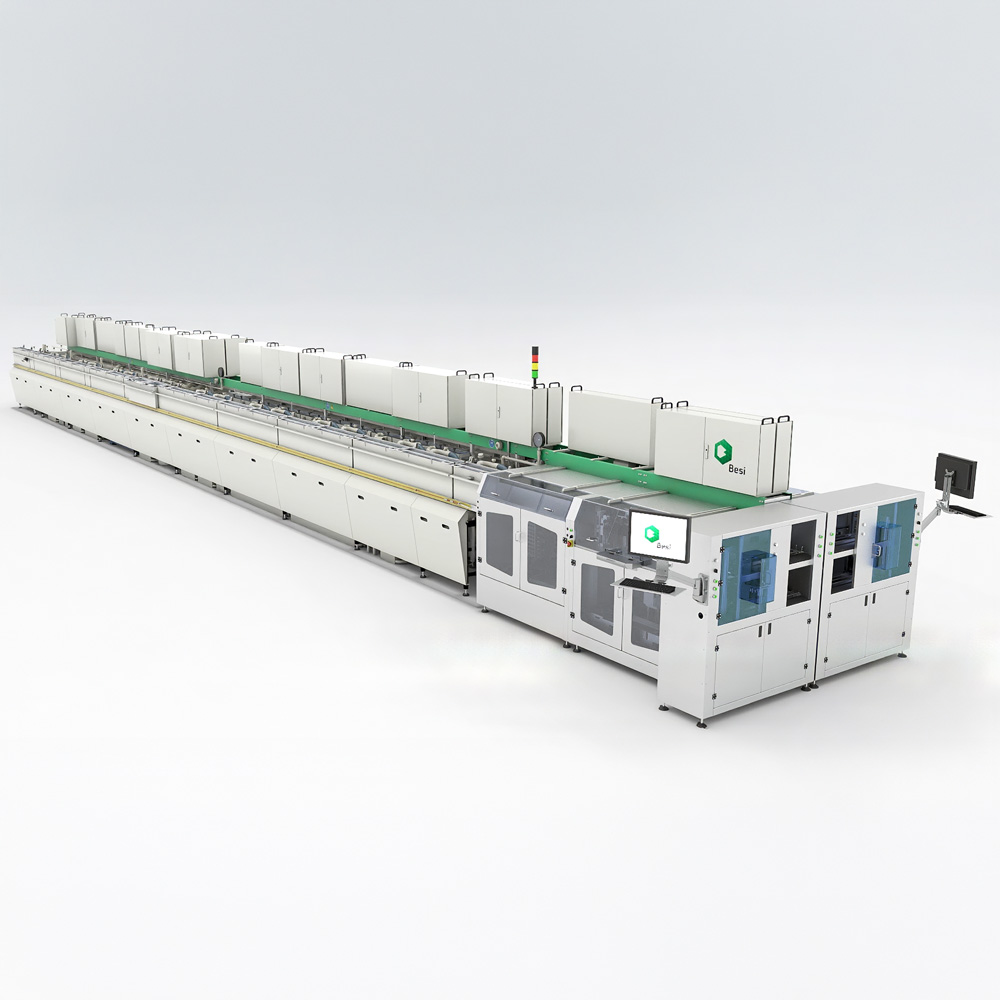
The Meco Electro DeFlash and Electro Plating Line are designed for the future and are capable of handling any kind of leadframe product. Any leadframe size up to 110 x 315 mm can easily be handled on the Meco EDF/EPL.
With an installed base of over 400 EDF/EPL systems, Meco has set the industry standard for leadframe solder plating. Each system is fully customized to your specific needs and is a green solution, with low power consumption and minimal chemical usage.
More informationThis link leads to an external website.


110 x 315 mm max. leadframe size
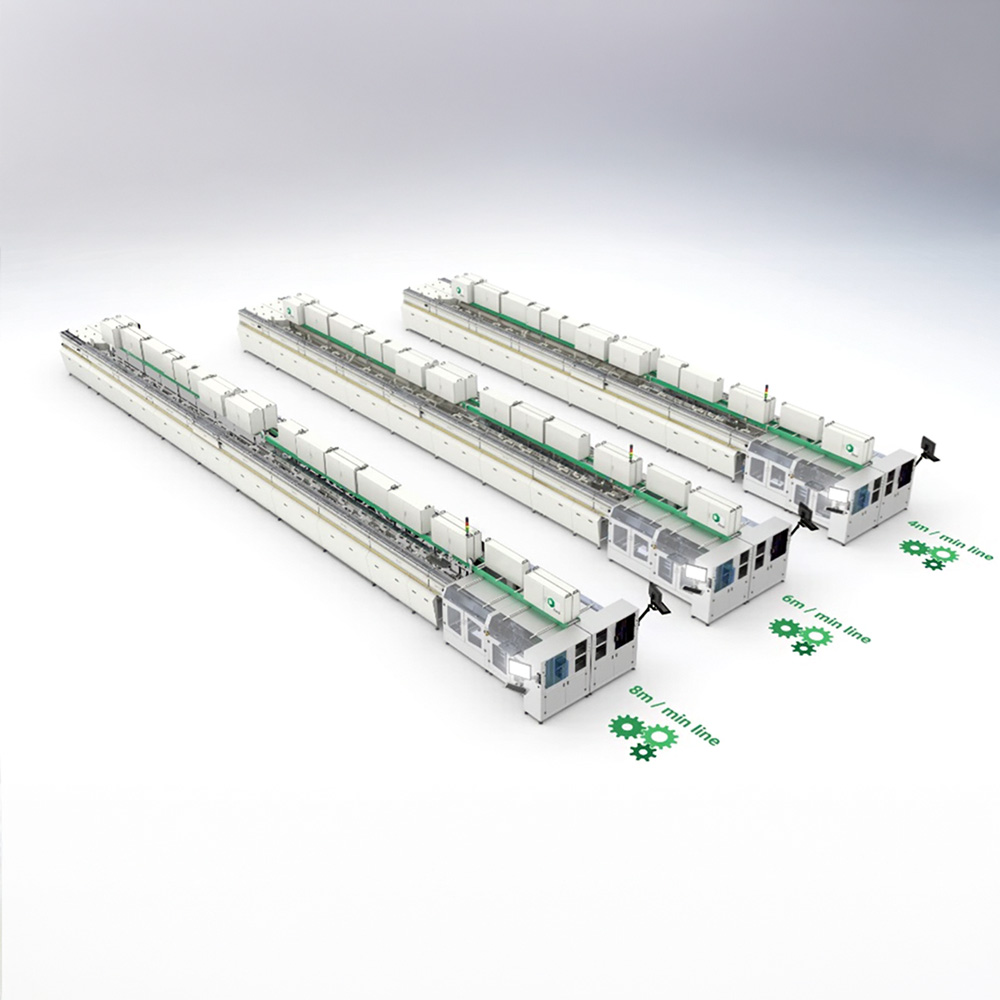
8 m/min. Speed
< 5 min. Product changover
> 400 Installed base
Key features
Setting the Standard in Leadframe Solder Plating
Meco has established itself as the industry benchmark for leadframe solder plating, with over 400 computer-controlled EDF/EPL systems installed worldwide, and the number continues to grow. Traditionally, leadframes were plated via hot-dip or rack plating, either manually or using hoist-operated installations. These methods were not only labor-intensive but also prone to uneven solder thickness distribution, which significantly impacts soldering quality.
The success of subsequent soldering processes depends heavily on the purity and precise thickness of the tin-alloy finish. Insufficient thickness fails accelerated aging tests, while excessive thickness on fine leads for SMT can cause bridging during soldering. Uneven thickness typically results from:
- Rack design and uneven anode positioning
- Variable strip lengths and widths creating gaps between strip ends, causing the “dog-boning” effect
The ideal solution for plating cut leadframe strips is a process that simulates a fully continuous reel-to-reel plating system.
The Meco EDF/EPL System: The Ideal Solution
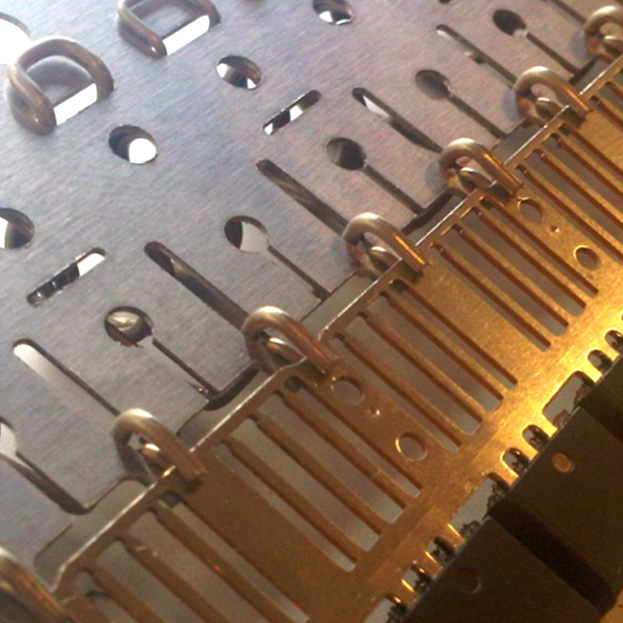
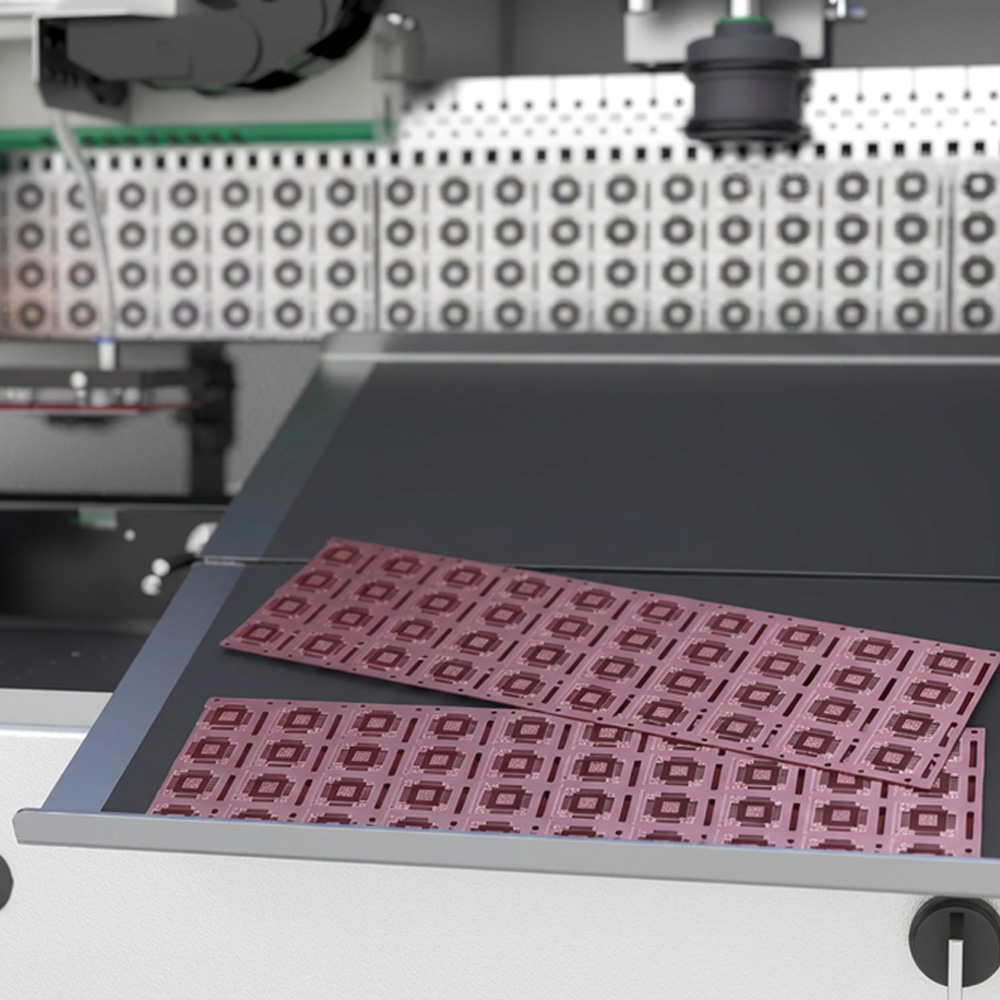
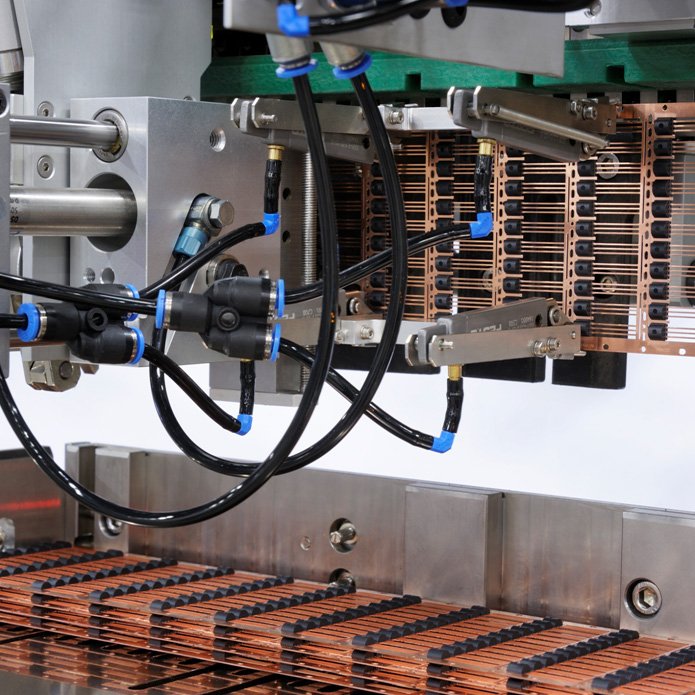
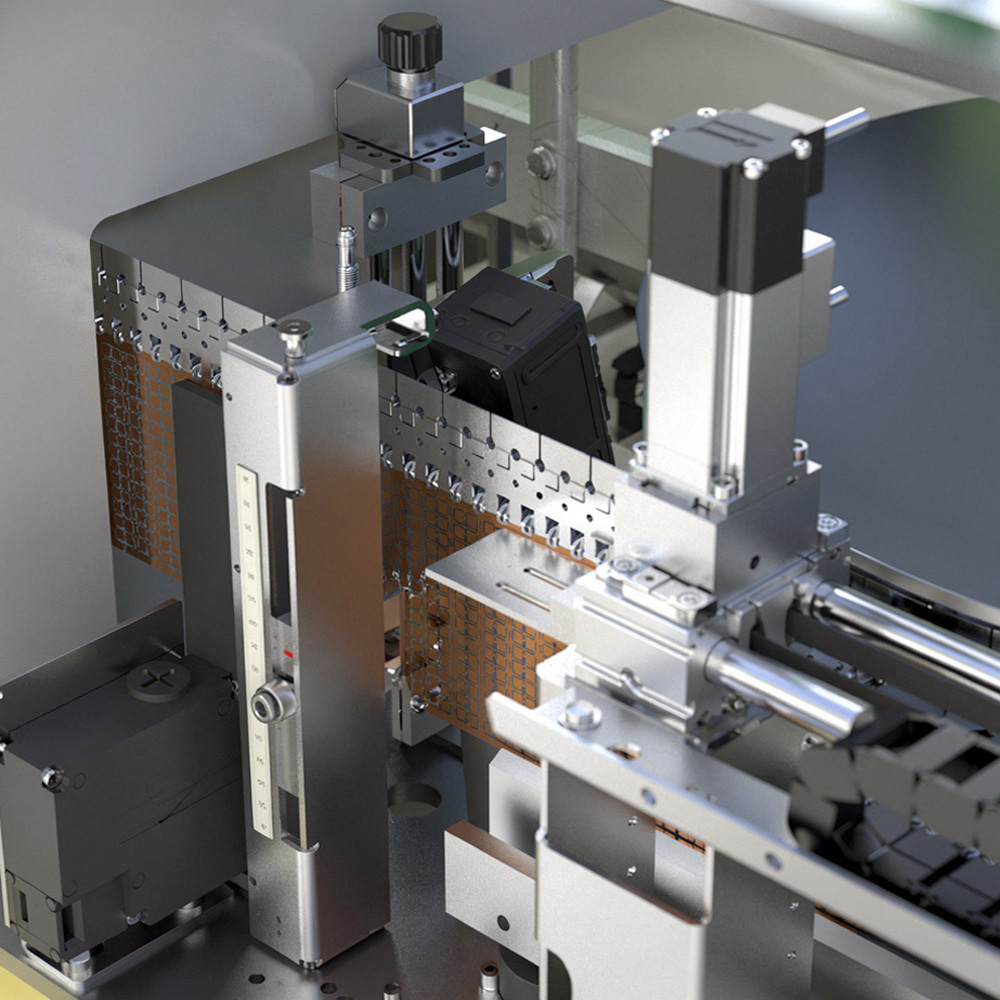
Our molded cut strips are loaded in stacks or slotted magazines and automatically placed onto an endless carrier belt. A specially designed clip device ensures mechanical and electrical contact between the strips and the metal carrier belt. The continuously moving belt – traveling at speeds up to 8 m/min -transports the strips through pre-treatment, rinsing, plating, post-treatment, and drying stations. At the fully automated, synchronized unload position, strips are discharged back into magazines. On the belt’s return path, flash deposits can be removed by a stripping process.
This continuous processing offers two key benefits:
- Consistent plating distribution: Each strip experiences identical plating conditions as the preceding and following strips, ensuring minimal variation both within and across product types.
- Minimal spacing: Strips are positioned closely together on the carrier belt, with gaps of only 2–3 mm, preventing burning and mimicking reel-to-reel processing.
Additionally, bottom shielding within the plating bath is computer-controlled and menu-driven, tailored to each product. This shielding reduces plating on lower areas, effectively eliminating the dog-boning effect without requiring operator intervention.
High Product Flexibility and Fast Changeover (<5 minutes)
The combination of the carrier belt with its universal loading and unloading systems makes this plating line highly adaptable. It supports a wide variety of product types, including powerframes, discretes, QFNs, and matrix frames. The system accommodates frame sizes ranging from 150 mm to 315 mm in length and 20 mm to 110 mm in width. Changeovers are quick and straightforward, typically under 5 minutes and requiring just one operator and a few product-specific parts.
Integrated Electro Deflash System (Meco EDF)
Post-molding, residual mold flash (resin bleed) can remain on leadframes, especially in critical areas such as heat sinks and between leads, where any flash prevents proper solder plating. The Meco EDF system removes this flash efficiently and can operate standalone or be fully integrated into the Meco EPL solder plating system.
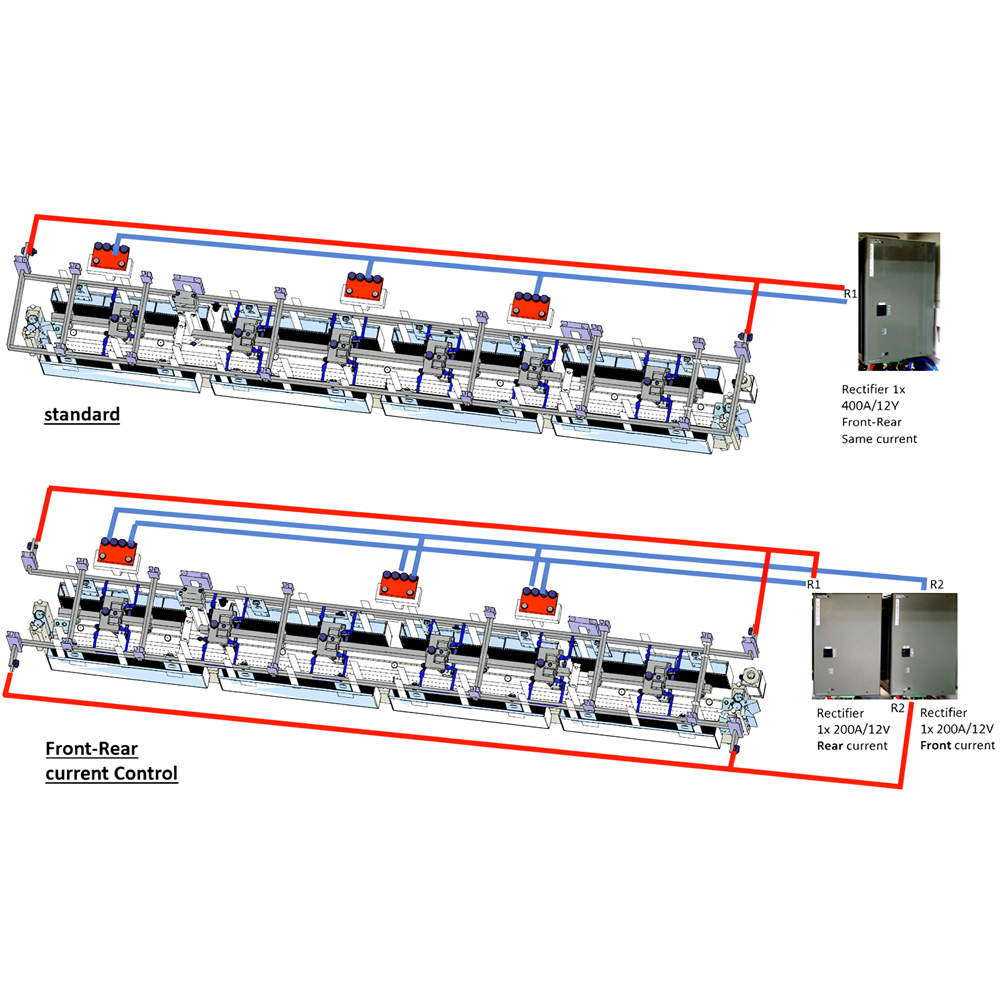
Once loaded onto the carrier belt, frames are immersed in a deflash solution combined with cathodic current. The chemicals soften the mold flash, reducing its adhesion, while the cathodic current generates hydrogen bubbles on the product surface. These bubbles mechanically loosen the flash from the metal. Following electrochemical treatment, a high-pressure waterjet removes the loosened flash, ensuring clean, defect-free surfaces ready for plating.
Computer-Controlled Precision
The Electro Plating Control Software (EPCS) simplifies plating line management with an intuitive Windows-based operator interface. The entire plating process is visually represented with schematic diagrams and color-coded status indicators. The system state is governed by a state diagram, allowing operators to start, stop, or power on the line with a simple mouse click.
Before production begins, the control system verifies that all process parameters are within specification. Key parameters are displayed prominently for real-time monitoring. Authorized users can access and modify setpoints, warnings, and error limits as needed. Process parameters are stored in recipes, which can be reviewed, edited, or copied online without interrupting ongoing production. An unlimited number of recipes can be created, facilitating fast and seamless product changeovers.
User access is secured by authorization levels, restricting tasks based on individual permissions. Each user must log in before operating the system, ensuring that only authorized personnel can perform sensitive actions.
Low Running Costs with High Quality Output
This versatile, high-quality plating line, featuring universal loading/unloading and integrated deflash capabilities, delivers superior production quality with minimal water consumption. The result is high yields and low operating costs, making the Meco EDF/EPL system an excellent investment for efficient, reliable leadframe solder plating.